
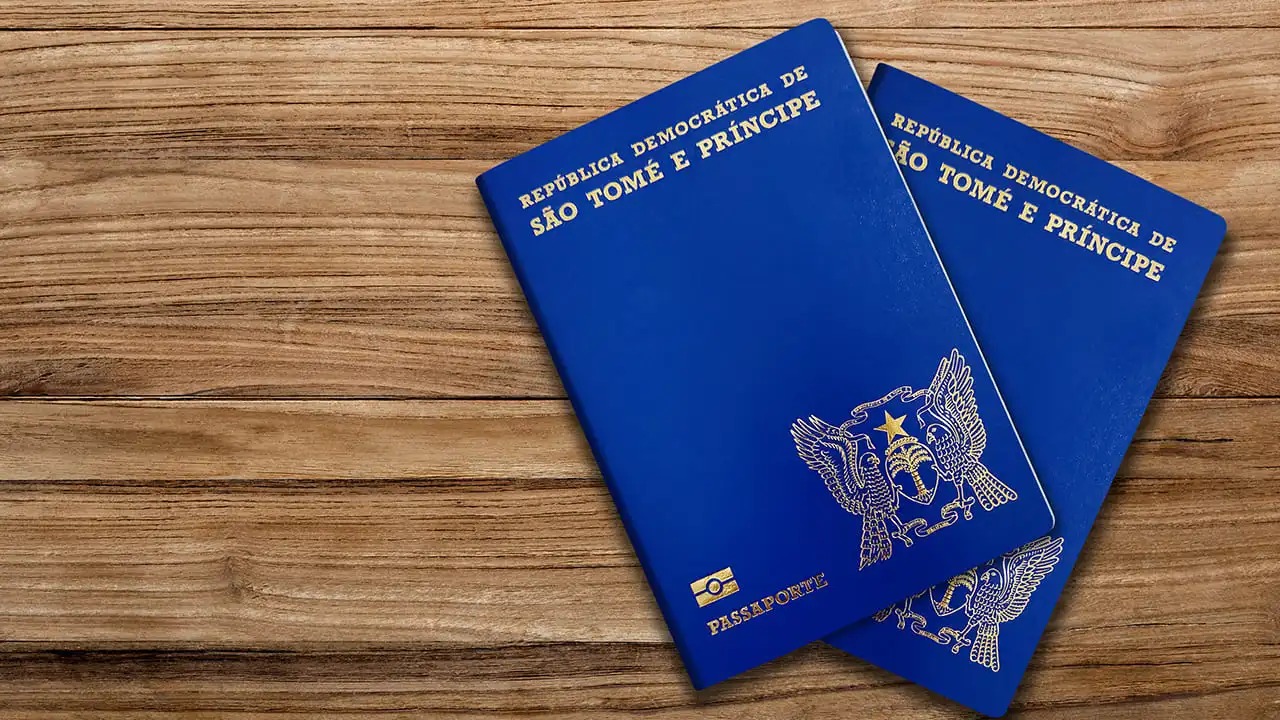
Online ads for the São Tomé and Príncipe passport make bold claims. Swift second citizenship. Extensive visa-free travel. But where's the proof? These promises come from unverified, inconsistent marketing websites—not official government law. There is no verifiable Citizenship by Investment program, and the true visa-free travel count is a complete mystery.
Primary Source - An original, authoritative document or record that provides firsthand evidence on a legal matter. Examples include official government legislation, court judgments, and international treaties published by the originating body.
Secondary Source - A document that discusses, interprets, or analyzes information originally presented in a primary source. Examples include news articles, academic journals, and marketing materials like a passport-ranking website.
What Are the Supposed Benefits of a São Tomé and Príncipe Passport in 2026?
Investment migration agencies paint the São Tomé and Príncipe passport as an undiscovered gem. A steal. They promise a fast, affordable path to a second citizenship, unlocking visa-free travel and a secure "Plan B."
There's just one problem. A big one. These claims are nowhere to be found in the country's official government channels. The promises of a quick investment-for-passport deal simply aren't backed by any accessible, published law. This gap between marketing hype and verifiable fact is a massive red flag for any serious applicant.
You have to be critical of unsourced benefits. The world of second citizenship is littered with programs that are unofficial, legally dubious, or outright scams. This article will dissect the popular claims about the São Toméan passport versus the reality grounded in verifiable law.

How Many Visa-Free Countries Can You Really Access?
A passport's power lies in its global mobility. But for São Tomé, the number of visa-free destinations is pure guesswork. Depending on which commercial website you visit, the figure swings wildly. Our research found claims of 58, 59, 60, 63, 71, 72, 74, 75, 96, or even 102 visa-free destinations. This staggering inconsistency is the single biggest red flag about the passport's real value.
All this data comes from secondary sources—passport-ranking websites, marketing blogs—not a primary source like a government gazette or a signed bilateral treaty. These commercial sites often rely on opaque methodologies and can be painfully slow to update when visa policies change, leaving you with outdated information when you can least afford it.
The most common figure you'll see is 58 visa-free countries. But that number comes from a commercial index, not a government authority. Without official confirmation, it's just marketing noise. It is certainly not a reliable metric for a life-altering financial and legal decision.
Comparison of Conflicting Visa-Free Claims
| Source Type | Claimed Number of Visa-Free Countries | Reliability |
|---|---|---|
| Passport-Ranking Website A | 58 | Low (Secondary, Commercial) |
| Investment Migration Agency B | 74 | Low (Secondary, Marketing) |
| Online Blog C | 63 | Low (Secondary, Unverified) |
| Other Secondary Sources | 59, 60, 71, 72, 75, 96, 102 | Very Low (Contradictory) |
| Official Government Source | Not Available | N/A (Required for verification) |
| Takeaway: The complete lack of a consistent, official number means any investment based on these figures is a significant gamble. The true visa-free access is unknown. |
Is There an Official Citizenship by Investment Program?
Countless websites suggest São Tomé and Príncipe offers a Citizenship by Investment (CBI) program. They often quote a minimum investment of $90,000 and a lightning-fast processing time of just 2 to 2.5 months.

Here's the thing: there is no accessible primary source to confirm any legal basis for such a program. A legitimate CBI program is created by national law, published by the government for all to see, with clear rules on who can apply, how much to invest, and what the process is. For São Tomé and Príncipe, no such law or official documentation is available for public or legal review.
Engaging with an agent promoting a program that isn't legally codified is a huge risk. Your investment could simply vanish. Worse, any citizenship/passport granted through an unofficial backchannel could be revoked by the government later, potentially leaving you stateless or facing legal trouble. Legitimate programs are proud of their legal foundations and advertise them openly.
Why is Verifying Information with Primary Legal Sources Crucial?
Getting a second citizenship is a serious legal process. It is not a consumer purchase. Relying on marketing brochures or unverified rankings is a recipe for disaster. The only safe path is due diligence through legal research using official databases and primary documents.
Consider this: all legitimate citizenship programs run deep background checks on applicants, often involving international law enforcement databases like those from Interpol. How this sensitive data is handled is governed by official protocols, such as Interpol's Rules on the Processing of Data. The complete silence from São Tomé and Príncipe about its security vetting, including its relationship with agencies like Interpol, is another major point of concern.
Even more, fundamental rights around nationality and travel are constantly shaped by international courts. Rulings from bodies like the European Court of Human Rights (ECHR) and legal acts found in databases like EUR-Lex create the global framework for citizenship rights. A real program operates within this system. The fact that a São Toméan CBI program has no traceable legal footprint in these systems should make any serious applicant slam on the brakes.

What Are the Confirmed Ways to Get São Toméan Citizenship?
While a quick CBI program seems to be pure fiction, there are traditional, legally sound paths to becoming a citizen of São Tomé and Príncipe. These methods are grounded in the country's actual nationality law—pathways common to most nations.
The standard routes to a citizenship/passport are not fast, but they are real:
- By Birth (Jus Soli): Simply being born on the territory of São Tomé and Príncipe.
- If you have a parent from São Tomé: Citizenship by descent (Jus Sanguinis) is a common right.
- Marriage to a Citizen: This involves marrying a São Toméan citizen and then meeting specific, strict residency and time requirements.
- Naturalization after long-term residency: This means legally residing in the country for many continuous years and meeting other criteria like integration and possibly language tests. This is a long-term commitment, not a transaction.
To pursue any of these options, you would need the official nationality law of São Tomé and Príncipe. The only true primary source for this is the country's own government—its Ministry of Justice, an embassy, or a consulate. While these paths are much slower than a phantom 2-month CBI offer, they provide legal certainty and result in a valid citizenship that won't be questioned later.
This article is published by an independent law firm for informational purposes only and does not represent or claim affiliation with any government body, international organization, or official authority.
Frequently Asked Questions
How strong is São Tomé passport?
A passport's "strength" is its visa-free access. As this article shows, claims for the São Tomé and Príncipe passport are all over the map, ranging from 58 to 102 countries. Without confirmation from a primary source, its true strength is unknown and likely far weaker than advertised.
This is about traveling to São Tomé and Príncipe, not with its passport. Visa rules depend on your current nationality. Citizens from the EU, US, Canada, and UK can usually enter visa-free for short stays (around 15 days), but this can change without warning. The only safe bet is to check with the nearest São Tomé and Príncipe embassy before you book any travel.
### Does São Tomé and Príncipe have a citizenship by investment program?You'll see widespread online claims about a program, usually citing a $90,000 investment. But there is no verifiable information from the government of São Tomé and Príncipe or any other primary source to confirm that an official, legally-backed CBI program exists. All the noise comes from secondary sources like marketing agencies.
The only legally certain routes are the traditional ones set by the country's nationality law. These are: being born in the country, having a São Toméan parent (descent), marrying a citizen (and waiting), or naturalization after living there legally for many years. You must consult the official laws or contact an embassy for the real requirements.